Profound is sales-gated again. It briefly published two self-serve tiers, Starter at $99/month and Growth at $399/month, and has since withdrawn both: as of 23 September 2026 its pricing page shows only a free trial and a custom Enterprise plan. GetIntel's $149 Growth plan covers five engines and 120 prompts on a credit card. Profound's real advantage sits at the Enterprise tier, where it reaches up to nine engines that nobody else matches, and that is now the only tier it sells.
Disclosure: GetIntel publishes this comparison and sells one of the two products in it. Profound's self-serve figures below were read from its own pricing page in August 2026 and are kept as a record of tiers it no longer offers, re-checked against the live page on 23 September 2026, when the only dollar figure on it was a $180M Series D.
In this article
- Is Profound enterprise-only?
- What does Profound cost?
- Which AI engines does each one track?
- Does either tool tell you where the citations come from?
- What does the source graph in this category actually look like?
- Which sources actually carry the influence?
- What is Profound genuinely better at?
- What does GetIntel do differently?
- Who each tool is really for
Is Profound enterprise-only?
Profound is enterprise-only again. This page previously said no, because for part of 2026 Profound did publish Starter at $99/month and Growth at $399/month as self-serve tiers. Both self-serve tiers are gone. Its pricing page now offers a free trial and Enterprise at custom pricing, with nothing in between. The trial itself has grown since we last looked: read on 23 September 2026 it runs 50 prompts daily for 7 days across ChatGPT, Gemini and Google AI Overviews, where in August it was 10 prompts run once against ChatGPT alone. A wider free trial with no paid step below Enterprise is a sales funnel, not a self-serve product. The tier breakdown we captured while the self-serve plans existed is kept in Profound pricing 2026.
The round trip is the useful part. "Enterprise-only, talk to sales" described Profound for most of 2025, stopped being true for a stretch of 2026, and is true again. A team with $99 a month could buy Profound without a procurement cycle for part of this year and cannot now. If you are comparing tools today, budget for a sales call.
What does Profound cost?
Profound costs whatever a sales call quotes, since it publishes no self-serve price. The figures below are the tiers as published in August 2026, $99/month for Starter and $399/month for Growth, both billed yearly. Neither is purchasable now, and they are kept here because the shape of what each tier bought is still the clearest guide to how Profound packages coverage. What separates them is engine count and prompt volume, not features in the abstract.
| Profound | GetIntel | |
|---|---|---|
| Entry | $99, ChatGPT only, 50 prompts | $29, 4 engines, 25 prompts |
| Mid | $399, 3 engines, 100 prompts | $79, 4 engines, 60 prompts |
| Upper self-serve | Not offered | $149, 5 engines incl. Claude, 120 prompts |
| Enterprise | Custom, up to 9 engines | not offered |
The line worth sitting with is the first one. Profound's entry tier was $99; GetIntel's top self-serve tier is $149. At that price Profound tracked one engine and 50 prompts; GetIntel tracks five and 120.
That is not a claim that Profound was overpriced. It is a different product shape. Profound's self-serve tiers read as an on-ramp to Enterprise rather than as the product, and withdrawing them settled the question: Enterprise is where its capability actually lives, and now it is the only thing on sale.
Which AI engines does each one track?
Profound reached one engine on its old $99 tier and three on the $399, and reaches up to nine on Enterprise. GetIntel covers four on every paid plan, with Claude as a fifth on Growth.
The full Enterprise set is ChatGPT, Perplexity, Google AI Mode, Gemini, Microsoft Copilot, DeepSeek, Claude, Google AI Overviews and Exa Search. The self-serve tiers it withdrew in September were far narrower: Starter covered ChatGPT alone and Growth covered three.
GetIntel covers ChatGPT, Perplexity, Gemini and Google AI Overviews on every plan, adding Claude on Growth.
So the honest engine comparison depends entirely on which Profound tier you mean. Against Enterprise, Profound covers surfaces GetIntel does not touch, Exa Search, DeepSeek, Copilot, Google AI Mode. Against Monitor or Growth, GetIntel covers more engines for less money. Any comparison quoting Profound's nine-engine breadth next to a self-serve price is comparing two different products.
Does either tool tell you where the citations come from?
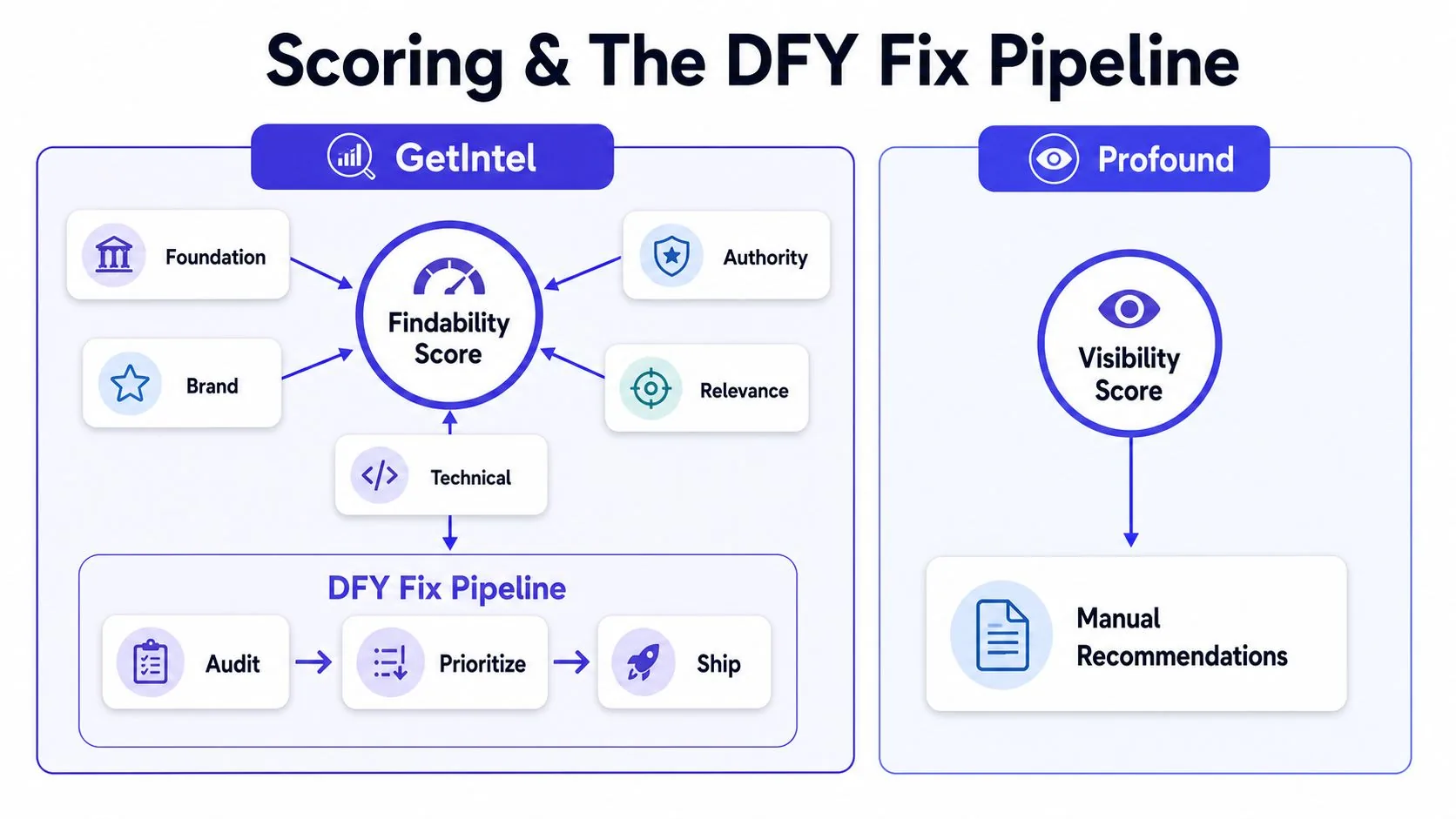
GetIntel and Profound both classify the sources AI cites, and Profound's classification is the finer of the two. Read from its citation feature page on 23 September 2026, Profound sorts every cited URL into one of six categories: Owned, Competitor, Earned Media, PR Wire, Social or Institution, plus a Custom category you define yourself. Its own wording is that Owned, Competitor and Custom are yours to define and the rest are auto-assigned but can be overridden by hand. Profound then lets you filter citation share to any one of the six categories, so "which publishers does AI trust in our category" is a two-click question rather than a research project.
GetIntel classifies sources too, on a coarser scheme. GetIntel tags every citing domain by ownership (yours, a named competitor, or third party) and by site type (corporate, editorial, UGC or reference). GetIntel's scheme has no PR Wire category, no Social category, and nothing editable by hand.
So on the taxonomy itself Profound wins, and it is worth being plain about that rather than talking around it. Where the two products diverge is what arrives after the classification. Profound points you at the top-cited publishers, exports the list as CSV or JSON, and can hand it to its own Agents to generate content against. GetIntel turns a high-value source that is citing your competitors and not you into a ranked off-page task with the outreach pitch already drafted, which your agent can pick up over MCP. Whether a drafted outreach pitch is worth more than six citation categories instead of four depends on whether writing the pitch is the part that stalls you.
What does the source graph in this category actually look like?
Most of the citations in this category's source graph belong to people who are not selling anything in it. Here is GetIntel's own source graph, from its reading of 1,545 AI answers in the seven days to 23 September 2026, covering 4,213 logged source citations.
| Where the citation goes | Share |
|---|---|
| Third-party sites | 86% |
| Named competitors | 13% |
| Us | 1% |
Split a different way, by the kind of site. Named competitors are pulled out into their own row rather than counted as corporate sites, so this is not a pure site-type split:
| Type of source | Share |
|---|---|
| Corporate | 57% |
| Editorial | 18% |
| Named competitor | 13% |
| UGC (forums, video, social) | 11% |
| Reference | 0% |
Those rows sum to 99%, not 100. The figures are whole percentages as the API reports them and the missing point is rounding, not an uncounted category.
GetIntel's source-graph data above yields two conclusions. First, owned media is a rounding error: only 1% of the citations in GetIntel's tracked category point at GetIntel, so any amount of work on GetIntel's own pages is competing for a single point of a hundred. Second, the three sites AI cited most in this category are not tools at all. LinkedIn was cited 258 times across 57 tracked prompts, Reddit 249 times across 54, and YouTube 213 times across 51. The best-performing competitor domain sat at 186. A single article on one independent consultant's site carried 106 citations by itself.
The 86/13/1 split above is GetIntel's own data about GetIntel's tracked category, not a measurement of Profound's product, and the two should not be confused. What that split shows is why source classification is a real feature rather than a reporting nicety. If 86% of the citations in your category land on sites you do not own, the question "which of those sites can I get onto" is the whole job, and a tool that cannot answer it is measuring a scoreboard you have no way to change.
Which sources actually carry the influence?
Influence and volume are different things, and the gap between them is where the useful work is. Profound reports both: its citation tool describes how much authority each source carries and which third-party sources carry the most weight with answer engines, and its Watched pages view tracks citation volume to individual pages over time. GetIntel exposes the same underlying signal through the spread of a domain's citations across prompts, engines and its own pages, though the concentration figures below are computed from its API for this article rather than read off a standing dashboard.
Here is what that looks like measured. Across the 39 most-cited domains in GetIntel's tracked category over the seven days to 23 September 2026, covering 3,574 of the window's citations, this is how much of each domain's citation count comes from its single best page:
| Domain | Top page's share of the domain's citations | Total citations | Prompts |
|---|---|---|---|
| nathanojaokomo.com | 100% | 106 | 19 |
| rivo.io | 100% | 58 | 23 |
| zapier.com | 94% | 47 | 22 |
| position.digital | 84% | 67 | 20 |
| trustmary.com | 83% | 48 | 15 |
| kime.ai | 80% | 79 | 22 |
| linkedin.com | 9% | 258 | 57 |
| reddit.com | 10% | 249 | 54 |
Six of those 39 domains have a single page carrying at least 75% of everything AI cites them for, and nine carry at least half from one page. The median domain takes 34% of its citations from its top page. Two domains in the set are one article and nothing else: every citation nathanojaokomo.com and rivo.io earned in the window came from one URL each.
That is the practical difference between a domain and a page. LinkedIn and Reddit are cited more than anyone, but their citations are spread across 57 and 54 prompts and hundreds of URLs, so there is no single door to knock on. One independent site's single article was cited more often than four of the ten competitor domains GetIntel tracks, level with a fifth, and behind the other five, all from one URL. You cannot pitch LinkedIn. You can pitch whoever wrote that article.
This is one category measured over one week, and the counts are GetIntel's own tracked prompt set rather than the whole web. The pattern it shows is the reason source influence is worth reporting separately from source volume: a ranked list of domains tells you where AI looks, and only the concentration behind each one tells you whether there is anything you can actually do about it.
What is Profound genuinely better at?
Profound is genuinely better at engine breadth, at scale, and at being the category's most established player: three real advantages.
Profound's nine answer engines are more than anyone else offers, and if your buyers ask questions in Copilot or DeepSeek, Profound is one of very few products that will tell you what happens there. It also tracks multiple companies under one account at Enterprise, supports larger teams, and has the funding and customer base that make it a safe procurement choice, which matters more than feature lists when someone else signs off the spend.
Profound's Agents credits model and integration list (Akamai, AWS, Cloudflare, Fastly, Vercel, WordPress and others) are built for organisations with real infrastructure, not for a founder running marketing on the side.
What does GetIntel do differently?
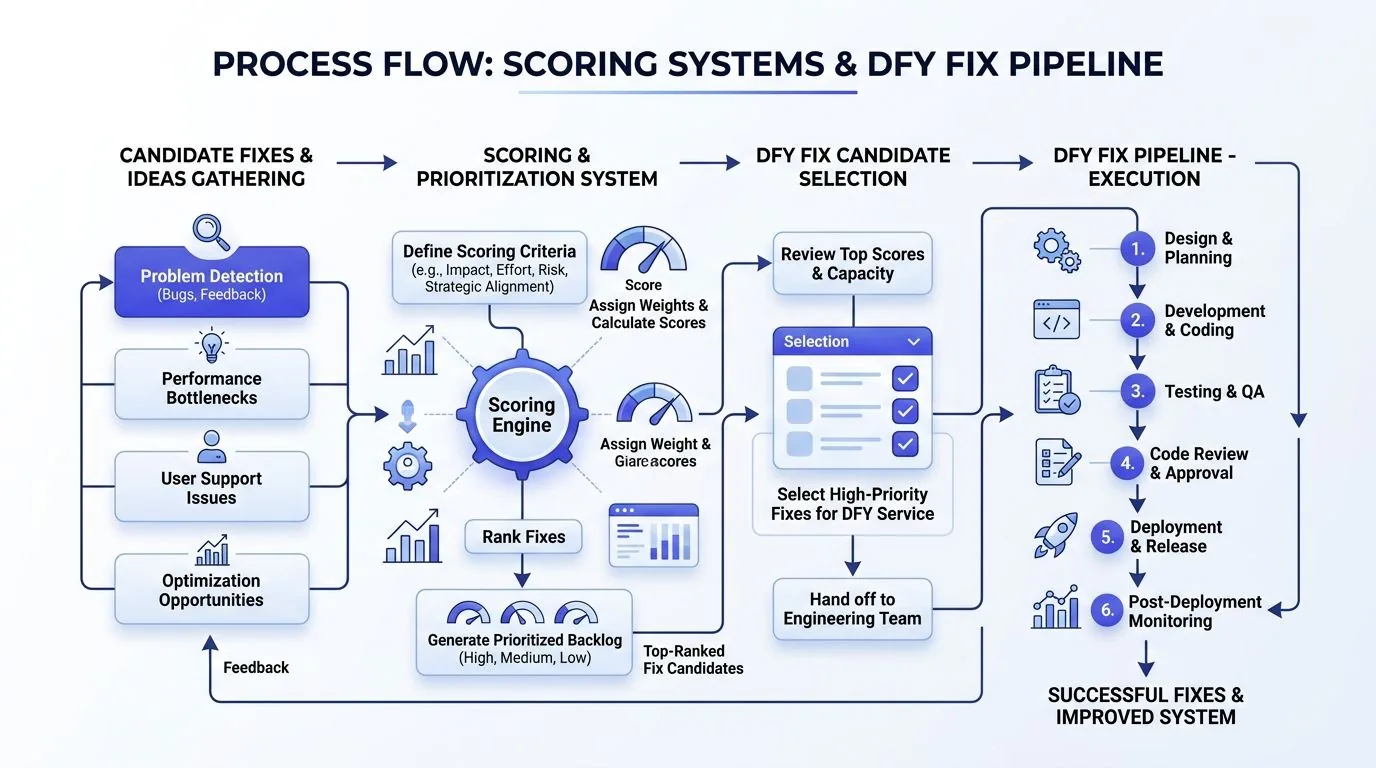
GetIntel drafts the fix rather than stopping at the measurement. llms.txt entries, Schema.org and Wikidata markup, counter-article briefs and outreach emails, generated against the specific gaps found and shipped through Claude Code or Cursor as a reviewable diff, with optional publishing to WordPress, Ghost or Webflow.
Two honest caveats apply to GetIntel's side of this comparison. A generated draft is a starting object, not a finished asset: a team with a good writer and spare time does better without it. And GetIntel has not run a controlled side-by-side test against Profound. Any figure presented as a head-to-head between these two products should be treated with suspicion, including from GetIntel. This comparison rests on each product's published pricing and capabilities, nothing more.
Who each tool is really for
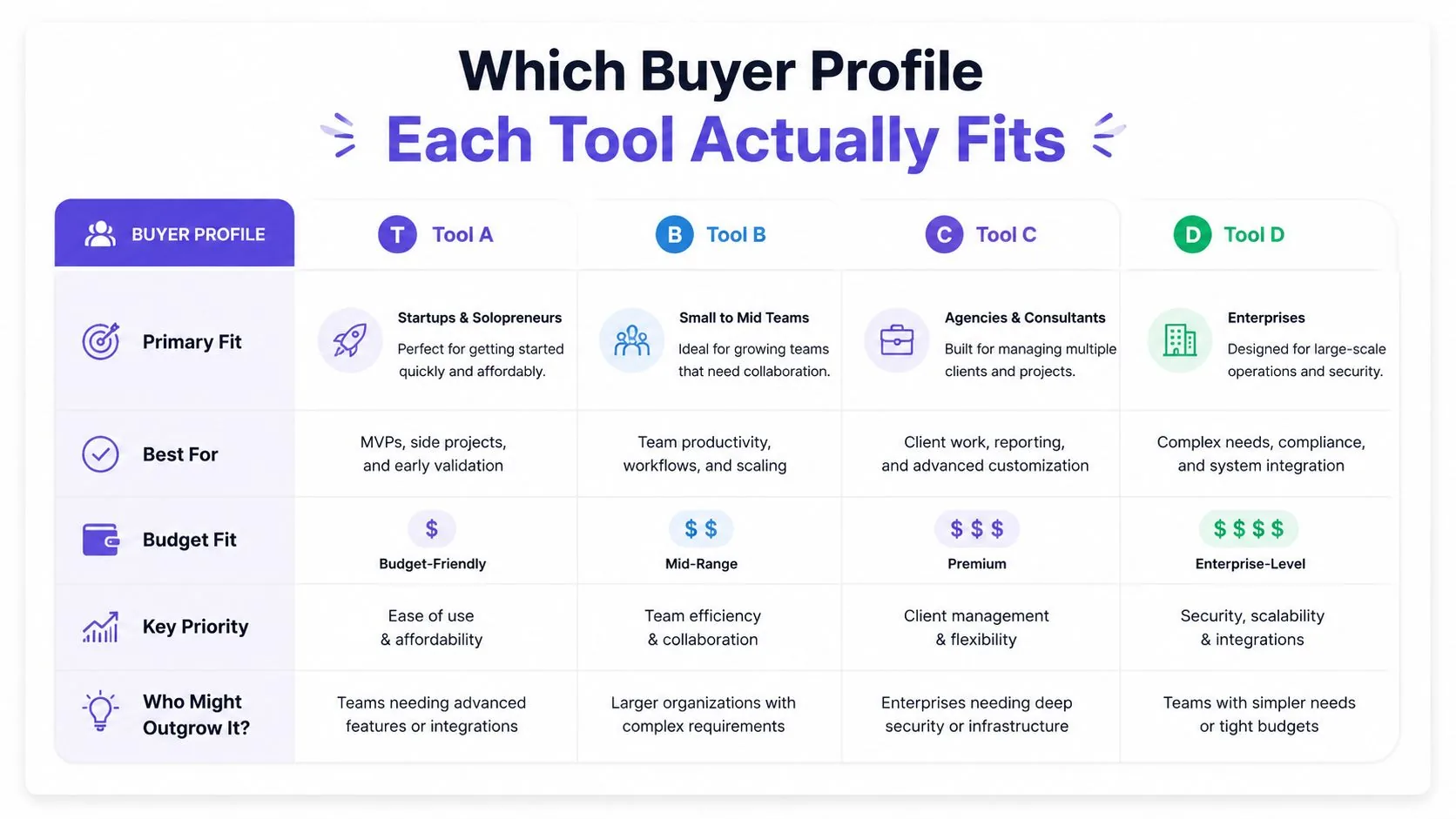
Choose between GetIntel and Profound on which engines you need and who is paying.
Choose Profound if you need coverage beyond the four big surfaces (Copilot, DeepSeek, Google AI Mode), if you are tracking several companies, or if you are buying through procurement where an established vendor with an enterprise contract is the safer choice. Its Enterprise tier does things nothing in this comparison matches.
Choose GetIntel if you are one team watching one or two products, want more than one engine at the price Profound charges for ChatGPT alone, and the thing that stalls your work is turning a finding into published output.
Look at neither yet if you have not established which engines your buyers actually use. That answer changes the recommendation more than any feature on this page, and it is free to find out. Take your twenty most important buyer questions and check them by hand across each surface first.
You can start free to run that test, and our AI visibility tracking explains how the probes work. For the same comparison against an SEO suite rather than a dedicated competitor, see GetIntel vs Semrush.
For the same comparison against other tools in this category: GetIntel vs Ahrefs Brand Radar. For the shorter, positioning-focused version of this comparison, see Profound alternatives.